Krav Maga vs Traditional Martial Arts for Real-World Self-Defense: What Actually Works
This post is part of our Defensive Tactics training resources.
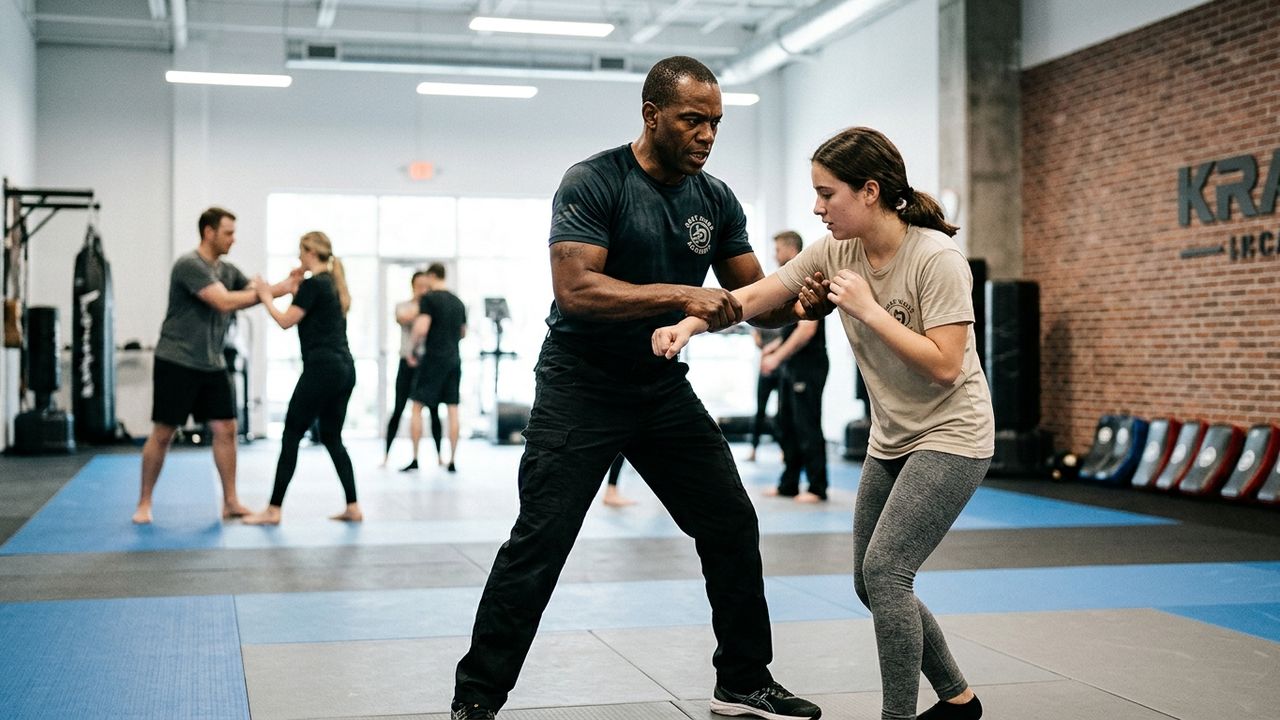
If you are trying to decide between Krav Maga and a traditional martial art for practical self-defense, the honest answer is this: Krav Maga is purpose-built for real-world threats and gets people functional faster, but the best system is the one you will actually train consistently. Context, commitment, and quality instruction matter more than the name on the door.
What Makes a Self-Defense System "Real-World Ready"?
When we talk about real-world readiness, we mean one thing: does this skill hold up when your heart rate spikes, the lighting is bad, and the other person is not cooperating? That is a very different test than a clean dojo sparring match or a choreographed kata. Real violence is chaotic, fast, and often involves multiple variables including weapons, confined spaces, and bystanders.
A system earns the label "real-world ready" when it trains for stress inoculation, prioritizes gross motor movements over fine motor techniques, addresses the full spectrum of a threat (before, during, and after), and includes de-escalation as a first-line tool. We hold our own curriculum to that standard, and it shapes every decision we make about what to teach and how to teach it.
The Case for Krav Maga in Practical Self-Defense
Krav Maga was developed for the Israeli Defense Forces with a single mandate: make civilians and soldiers effective as quickly as possible. That origin shapes everything about the system. Techniques are built on natural body mechanics, which means they are easier to retain under pressure. The curriculum addresses common real-world scenarios including grabs, chokes, weapon threats, and ground defense rather than competition rules.
We teach Krav Maga because it aligns with what the data tells us about how violence actually unfolds. According to the FBI's Uniform Crime Reporting data, the majority of violent crimes happen quickly and at close range, leaving little time for complex technique retrieval. Krav Maga's emphasis on simultaneous defense and counterattack, aggressive forward pressure, and immediate disengagement maps directly onto that reality.
Where Traditional Martial Arts Genuinely Shine
We want to be fair here, because dismissing traditional martial arts entirely would be intellectually dishonest. Disciplines like Brazilian Jiu-Jitsu, Muay Thai, Judo, and wrestling have produced some of the most effective fighters in the world. The live sparring culture in these arts builds genuine pressure-tested skill. If you train Brazilian Jiu-Jitsu seriously for two or three years, you will be able to control and submit most untrained attackers on the ground.
The limitations show up in specific contexts. Traditional arts are often designed around one-on-one, rule-bound engagements. They may not address weapons, multiple attackers, or the legal and psychological aftermath of a violent encounter. They also require years of consistent training to reach functional competence, which is a real barrier for corporate teams or individuals who need foundational skills in a shorter window.
What Does Our Curriculum Actually Look Like?
Our approach draws on multiple disciplines because real-world self-defense does not fit neatly into one system. We integrate Krav Maga striking and threat-response principles with ground defense concepts and defensive tactics frameworks. We also bring a strong emphasis on de-escalation and situational awareness, because the best outcome in any confrontation is the one that never becomes physical.
Our instructors hold an IKI (Israeli Krav International) Certified Instructor credential, Brazilian Black Belt credential, Monadnock Defensive Tactics (MDTS) Instructor credential, and a Personal Trainer certification.
That combination is not accidental. It means we can teach a corporate employee how to break a wrist grab and disengage, walk a law enforcement team through supplemental ground-control concepts, or help a security-conscious organization build a culture of awareness and de-escalation. You can explore the full scope of what we offer on our Defensive Tactics service page.
Which System Is Right for Your Team or Situation?
The answer depends on your goals, your timeline, and your context. Here is how we think about it for the different groups we work with.
Corporate teams and civilian groups benefit most from a Krav Maga-based approach because the learning curve is shorter, the scenarios are directly applicable to workplace and everyday environments, and the training can be structured around a half-day or full-day format without requiring ongoing weekly attendance.
Law enforcement professionals often have existing defensive tactics training and are looking for supplemental skill-building in specific areas: weapon retention, ground defense, or de-escalation under stress. We tailor sessions to fill those specific gaps rather than starting from zero.
Individuals with a traditional martial arts background often find our training valuable as a pressure test for skills they already have. We introduce scenario-based training, stress inoculation drills, and real-world context that a traditional curriculum may not emphasize.
The Bottom Line on Krav Maga vs Traditional Martial Arts for Self-Defense
We are not here to tell you that one system is universally superior to every other. What we will tell you is that the principles of effective self-defense are consistent across good systems: awareness first, de-escalation when possible, simple and aggressive response when necessary, and training under realistic stress. Krav Maga is built around those principles from the ground up, which is why it is the foundation of what we teach.
If you have trained in a traditional art and love it, keep training. Add pressure testing, add scenario work, and add situational awareness to what you already know. If you are starting from scratch or building a program for a team, Krav Maga gives you the most functional return on your training investment in the shortest time.
We serve Greater New Orleans and southeastern Louisiana, and because we are fully mobile, we come to your location so your team does not have to travel or rearrange schedules around a fixed facility. Whether you are a corporate organization, a law enforcement agency, or a group of individuals who want real skills for real situations, we are ready to build a program around your needs. Reach out today and let us talk through what the right training looks like for your group.
